AI-Powered SEO Audits: What Cross-Model Validation Actually Means
Published Mar 17, 2026 · 10 min read
Every AI SEO tool claims intelligence. Few explain what happens when that intelligence is wrong. Here is why cross-model validation is not optional.
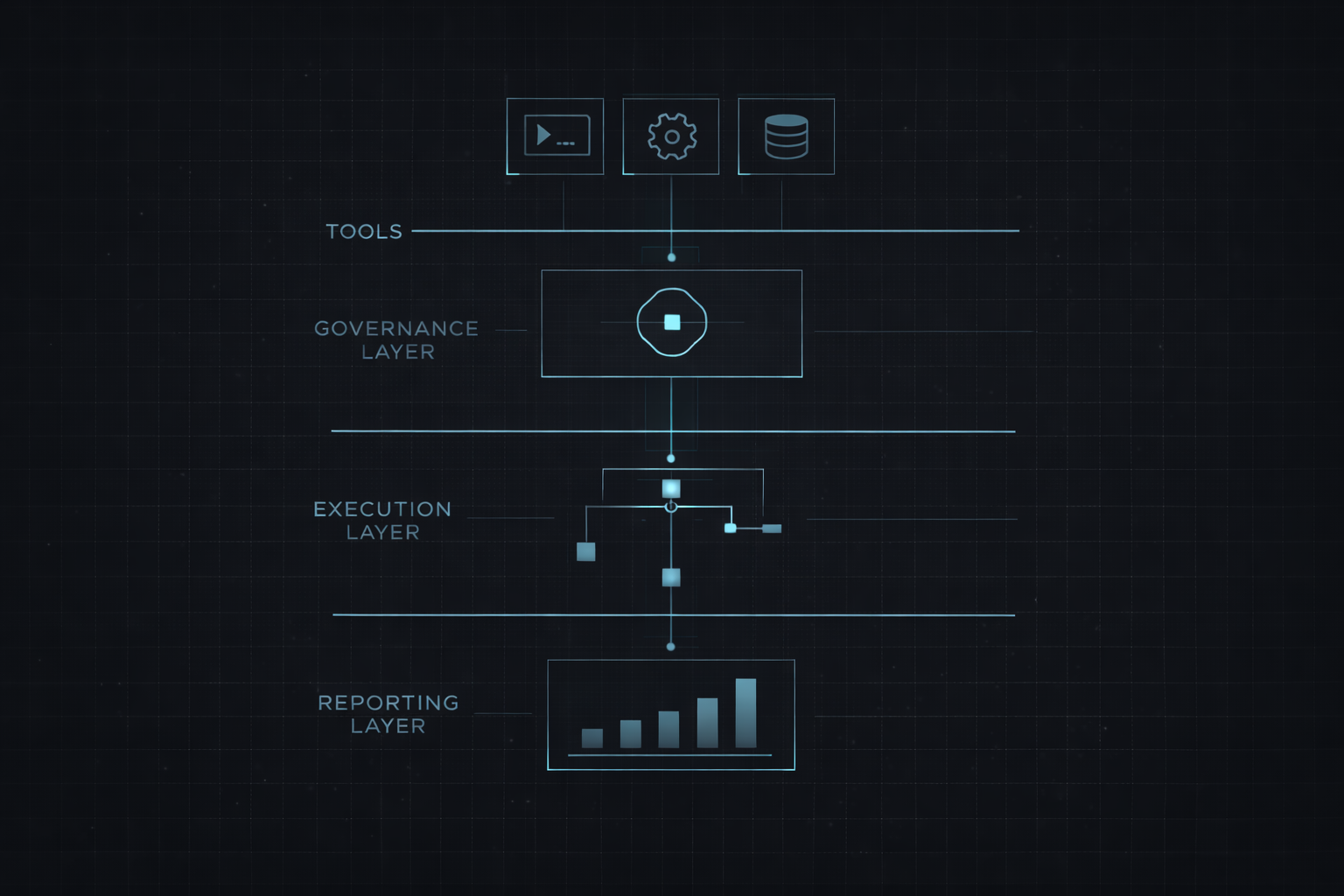
Why single-model AI audits hallucinate
AI-powered SEO tools are everywhere. Paste in your URL, get an instant analysis, receive recommendations. The pitch is compelling: AI can analyze more data, faster, than any human consultant. And that part is true. The part they do not mention is that AI also generates confident-sounding analysis that is completely wrong.
This is the hallucination problem, and it is not a bug that will be patched in the next release. It is a fundamental property of how large language models work. When a model analyzes your site, it is doing two things simultaneously: processing your actual data and pattern-matching against its training corpus. When your data is sparse or ambiguous, the model fills in gaps with patterns from other sites. The result looks like analysis. It reads like analysis. But it is not grounded in your data.
A single-model SEO audit has no mechanism to catch this. If the model says “your internal linking structure is causing crawl depth issues,” there is no second opinion to verify whether that claim is supported by the actual crawl data or whether the model is pattern-matching from similar sites in its training set.
This is not a theoretical concern. We have seen single-model audits recommend restructuring sites that had no structural issues, flag canonical problems that did not exist, and miss the actual primary constraint entirely because the model latched onto a familiar pattern instead of the unfamiliar truth.
How single-model analysis fails
The model generates plausible-sounding SEO recommendations that are not supported by your actual crawl data. It invents issues that do not exist or overstates the severity of minor problems.
The model matches your site to patterns from its training data and outputs generic best practices instead of analyzing your specific structural and competitive context.
The model presents uncertain findings with the same confidence as well-supported ones. There is no mechanism to distinguish between strong evidence and educated guessing.
The model generates an exhaustive list of possible improvements without constraint identification. Everything becomes a recommendation, with no hierarchy or prioritization.
What cross-model validation actually does
Cross-model validation is the practice of using multiple AI models from different providers to analyze the same data independently, then having them challenge each other’s findings. It is borrowed from a principle in engineering called redundancy — critical systems do not rely on a single point of analysis.
In our diagnostic methodology, this works as a specific architecture. The primary model processes your structured crawl data and generates findings. A second model from a different provider reviews those findings adversarially — at zero temperature to minimize creative interpretation. The reviewer is explicitly looking for unsupported claims, logical inconsistencies, and hallucinated findings.
The key design decision is using models from different providers. Models from the same provider share training data and architectural biases. If GPT hallucinates a finding, another GPT variant is likely to confirm it because it shares the same underlying patterns. A Claude model reviewing a GPT finding — or vice versa — brings genuinely independent analysis because the models have different training data, different architectures, and different failure modes.
This is not foolproof. Both models can agree on something wrong. That is why cross-model validation is one layer in a multi-layer system, not the entire solution. But it catches a significant category of errors that single-model analysis cannot detect at all.
Four steps from analysis to authorization
The primary model analyzes your crawl data and generates findings independently. It works from structured data — not free-form prompts — to ground its analysis in measurable signals.
A different model from a different provider reviews the findings at zero temperature. It challenges every claim, looks for unsupported assertions, and flags logical gaps.
The health score is calculated by code, not by either AI model. Consistent rules applied to crawl data produce a reproducible score that is not subject to model variability.
Every recommendation passes through a human approval gate before implementation. You are the final checkpoint — AI informs the diagnosis, but you authorize the action.
Why governance matters when AI touches your site
Cross-model validation reduces errors. Deterministic scoring removes model opinion from the numbers. But neither is sufficient when the output of the analysis is going to change your live website. That is where governance becomes non-negotiable.
Governance in this context means explicit human authorization for every action that modifies your site. For law firms and other professional services where every page edit can trigger advertising-rule review, this is more than process hygiene — it is liability protection. The AI identifies the constraint. The AI generates recommendations. But no recommendation executes without your approval. This is the governed audit model — diagnosis is AI-powered, but execution is human-authorized.
This matters because the failure modes of AI are different from the failure modes of humans. AI fails by being confidently wrong about specific data points. Humans fail by not having enough time to analyze everything. The combination — AI analysis with human authorization — compensates for both failure modes. The AI processes data at scale that no human could review manually. The human applies judgment and context that no AI can reliably replicate.
Without governance, AI-powered SEO becomes a black box that makes changes to your most important digital asset based on analysis you cannot verify. With governance, it becomes a powerful diagnostic tool that informs your decisions while you retain complete control. The difference is not technical sophistication — it is whether you trust the system enough to let it act without your knowledge. We think you should not have to. Every action through governed execution requires your explicit sign-off.
See cross-model validation in action
Start with a free diagnostic to see how multi-layer analysis identifies your primary constraint. Upgrade to the Digital Presence Audit for the complete cross-validated diagnosis.