What Is a Governed SEO Audit? How It Differs from Traditional SEO Audits
Published Mar 17, 2026 · 10 min read
Traditional SEO audits give you a list. A governed audit gives you a diagnosis, an approval process, and an immutable record of every change.
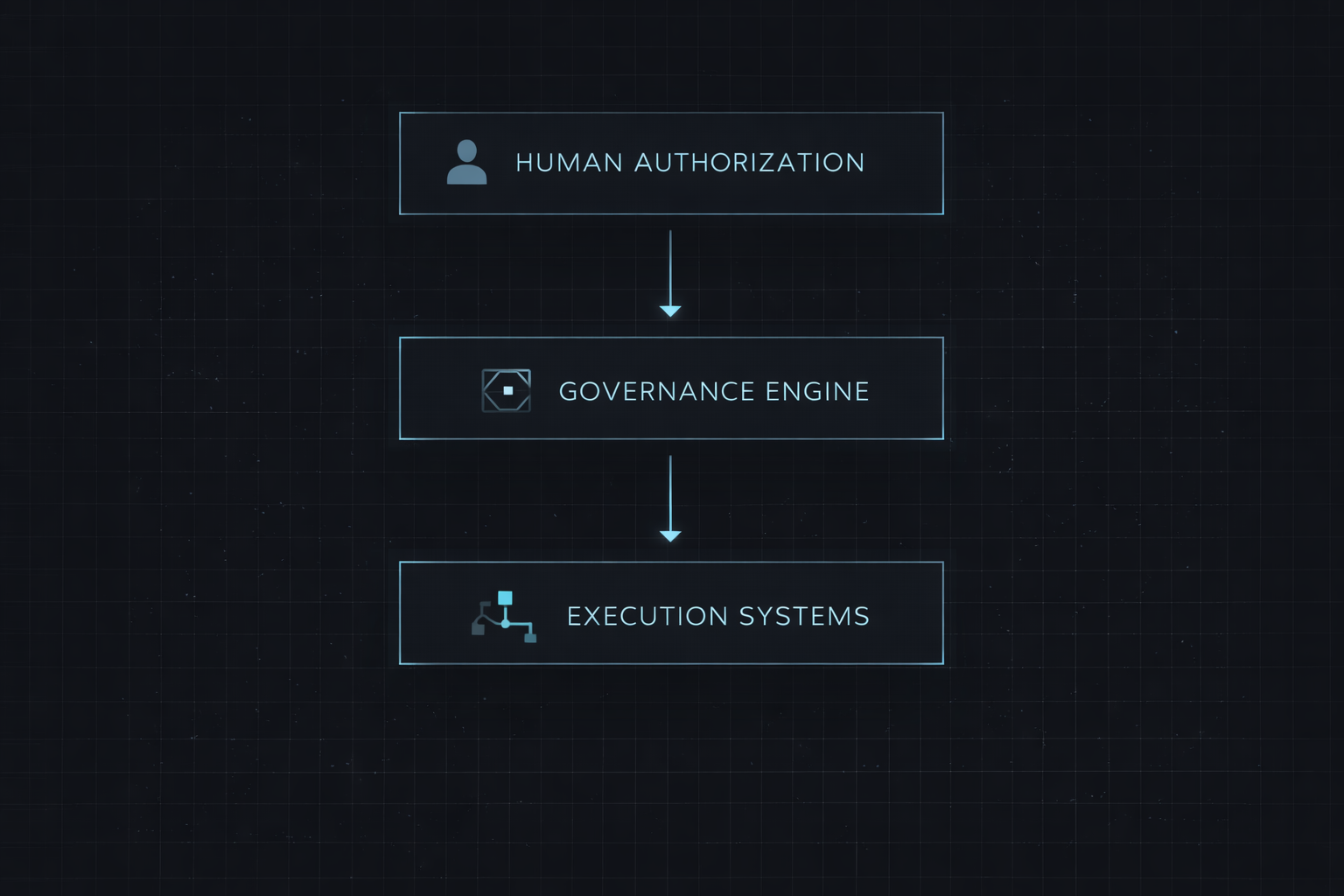
Why traditional SEO audits fail
You pay $2,000 for an SEO audit. You receive a 40-page PDF with 200 issues, color-coded by severity. Red, yellow, green. Fix everything. Good luck.
This is the standard model for SEO audits, and it has a fundamental problem: it treats diagnosis like inventory. The auditor crawls your site, dumps every issue they find into a spreadsheet, and leaves you to figure out what actually matters. There is no constraint identification, no prioritization framework, and no approval process for what happens next.
The result is predictable. Teams spend months fixing issues that do not move rankings. They optimize title tags on pages that have no internal links pointing to them. They add schema markup to pages that Google is not even crawling. An HVAC contractor might pour effort into blog content while their service-area pages stay invisible; a law firm might rewrite practice-area copy when the real bottleneck is a missing local citation strategy. The audit told them what was wrong but never identified what was limiting growth.
A governed SEO audit takes a fundamentally different approach. Instead of listing everything that could be improved, it identifies the single constraint most limiting your organic performance — and wraps every recommendation in an approval layer that gives you explicit control over what changes and when.
What governance means in SEO
Governance is a concept borrowed from infrastructure engineering. In that world, no change goes to production without review, approval, and an audit trail. The same principle applies to your website.
In a governed SEO audit, governance means three things. First, every recommendation traces back to measured data — not opinion, not best practices, not “we think this might help.” The diagnosis is evidence-based and reproducible. Run the same audit twice, get the same constraint identification.
Second, every proposed change requires your explicit authorization before implementation. This is the approval layer. When the audit recommends restructuring your internal linking, that recommendation does not execute automatically. You review it. You approve or reject it. You control the timeline.
Third, every action that does execute gets logged in an immutable record. You can see exactly what changed, when it changed, and what the measured impact was. This is the audit trail — the mechanism that makes the entire process transparent and reversible.
How constraint-based diagnosis works
Traditional audits use a checklist model: scan for known issues, flag everything, sort by severity. The problem is that severity is context-dependent. A missing H1 tag is critical on your homepage and irrelevant on a utility page. A checklist cannot make that distinction.
Constraint-based diagnosis works differently. The system runs six independent analysis layers — structural crawl, metadata extraction, competitive SERP sampling, cross-model AI analysis, market enrichment, and deterministic scoring. Each layer generates findings independently. The system then identifies patterns across all layers to determine which single issue is most strongly supported as the primary growth bottleneck.
This is the constraint map. Instead of 200 issues with no hierarchy, you get one primary constraint with a confidence score, supporting evidence from multiple data sources, and a clear explanation of why this specific issue is limiting growth more than anything else.
The constraint map also shows secondary issues, but explicitly ranks them by their relationship to the primary bottleneck. Some secondary issues resolve automatically when the primary constraint is addressed. Others become the next constraint once the first is fixed. This hierarchy is what turns a list into a diagnosis.
Four layers of a governed audit
The audit identifies a single primary constraint — the one bottleneck most limiting your growth. Not a checklist of 200 issues. One constraint, supported by evidence from multiple analysis layers.
Multiple AI models analyze your data independently, then challenge each other's findings. One generates the diagnosis; another reviews it adversarially. Errors get caught before they reach you.
Every recommended change requires your explicit approval before implementation. Nothing touches your site without authorization. You review, approve, or reject each action individually.
Approved changes execute through a controlled pipeline with immutable records. Every mutation is logged, timestamped, and reversible. You can audit the audit.
When governance changes the outcome
Governance is not bureaucracy. It is quality control. Without an approval layer, SEO recommendations execute on trust — trust that the auditor identified the right issues, trust that the proposed changes will not break anything, trust that the implementation matches the recommendation.
With AI now generating SEO recommendations at scale, the approval layer becomes critical. Single-model AI analysis hallucinates. It generates plausible-sounding recommendations that are not supported by your actual data. The cross-model validation architecture catches many of these errors, but the human approval gate catches the rest. You are the final checkpoint.
This matters most when moving from audit to execution. A governed audit connects directly to governed execution — the implementation phase where approved changes are deployed through the same controlled pipeline. The audit is not a document you hand to a developer. It is the first stage of a governed workflow that carries authorization and evidence through every step. The same governance principles apply to operational workflows — explore our automation audit for non-SEO systems.
See what a governed audit looks like
Start with a free diagnostic to identify your primary constraint. Upgrade to the Digital Presence Audit for the complete constraint map, approval workflow, and execution pipeline.