OpenClaw is the most powerful AI assistant ever built. That’s exactly why it needs governance.
Published Mar 17, 2026 · 10 min read
What OpenClaw is
OpenClaw is an open-source AI agent with over 310,000 GitHub stars. Unlike chatbots that generate text and wait for you to act on it, OpenClaw executes real tasks — across WhatsApp, email, file systems, browsers, and virtually any application you connect to it.
It is model-agnostic. It works with Claude, GPT, local models, or any LLM you point it at. Its skills system is extensible, meaning community-built plugins can teach it to do almost anything on your machine or in the cloud.
This is not a chatbot. It is an autonomous executor. When you give OpenClaw a task, it breaks it down into steps, selects the right tools, and carries out the work without waiting for you to copy-paste commands or click buttons. It acts.
That level of autonomy is exactly what makes it both powerful and dangerous.
The security problem no one wants to talk about
Wikipedia documents ongoing security scrutiny from Cisco researchers who found that OpenClaw’s skills system can perform data exfiltration and prompt injection without user awareness. The attack surface is not theoretical — it is demonstrated.
The Chinese government restricted OpenClaw from state enterprises over security risks. OpenClaw’s own maintainer publicly warned it is “too dangerous” for users who cannot understand command lines. These are not fringe critics. These are people closest to the technology sounding alarms.
The root issue is permissions. OpenClaw can access email, calendars, messaging platforms, file systems, and browsers. When granted broad permissions — which many users do by default — a misconfigured or compromised instance can read, modify, and send data across every connected system without explicit approval.
For personal use on a machine you fully control, the risk may be acceptable. For businesses handling client data, financial operations, or compliance-sensitive workflows, it is not.
What governance adds to OpenClaw
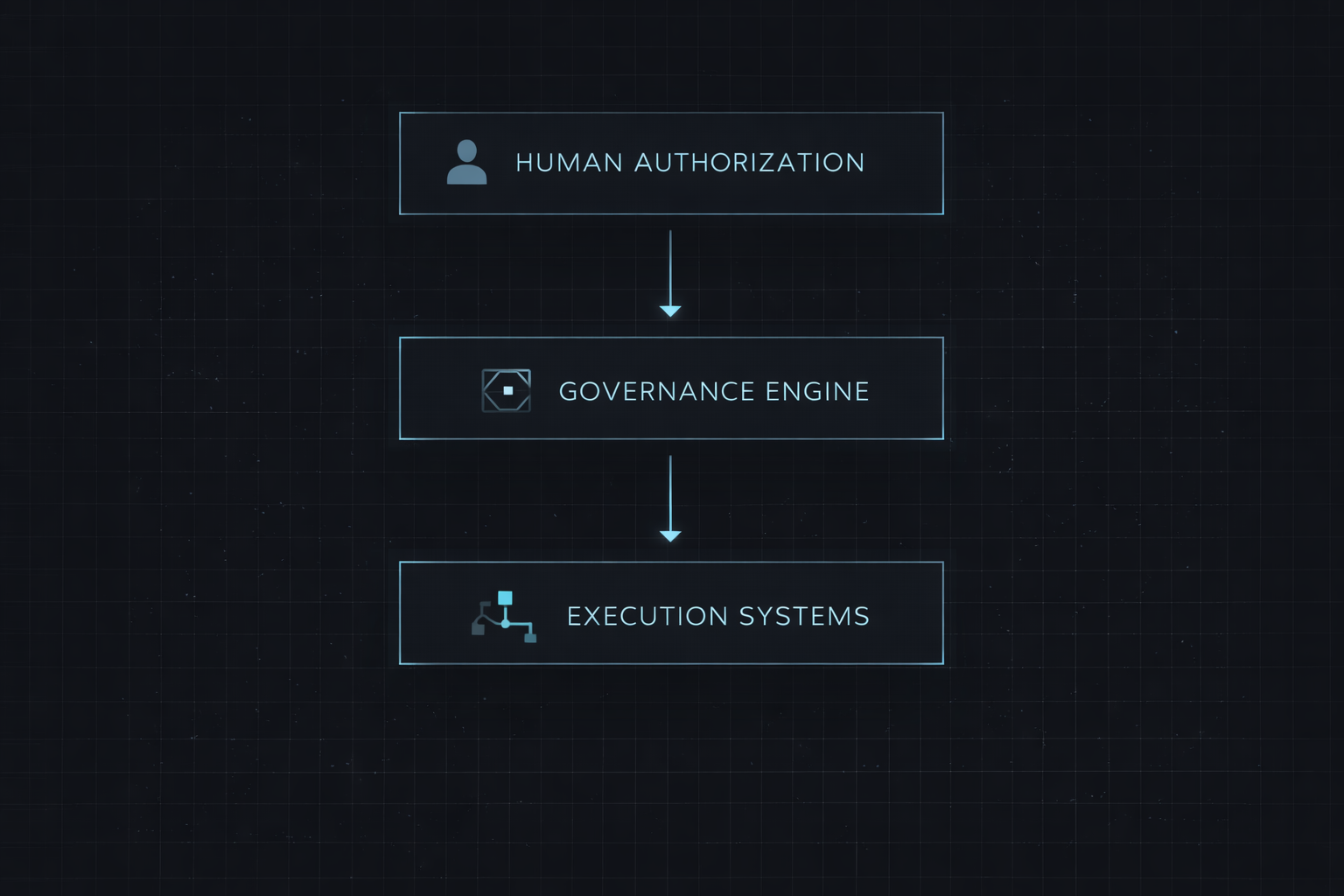
NoCode Labs built a governance layer that integrates directly with OpenClaw. Instead of letting the agent execute freely, every proposed action passes through a structured approval pipeline before anything touches your systems.
PIN-gated execution means no action runs without human authorization. Every proposed change is documented before execution — what the agent wants to do, why, and what systems it will affect. You review the proposal and explicitly approve or reject it.
Full audit trail captures what changed, when it changed, why it changed, and who approved it. This is not a log file buried in a terminal. It is an immutable record designed for accountability and compliance review.
Approval gates sit at every decision point. OpenClaw proposes, you decide. The agent never acts unilaterally on external systems. If something goes wrong, rollback capability lets you reverse any action the governance layer authorized.
The governance layer does not reduce OpenClaw’s power. It channels that power through human judgment.
How governed OpenClaw works
The AI agent analyzes your workflows, identifies automation opportunities, and proposes specific actions. It does the thinking — mapping dependencies, evaluating constraints, and recommending the highest-leverage interventions.
Every proposed action is logged, documented, and queued for approval. The governance layer captures what the agent wants to do, what systems it will touch, and what the expected outcome is — before anything executes.
PIN-gated approval ensures only authorized humans can greenlight execution. Once approved, the action runs and results are measured against expectations. Every outcome is recorded in the audit trail.
Why this matters for businesses
OpenClaw without governance is powerful but unpredictable. It can accomplish remarkable things — and it can also send the wrong email, modify the wrong file, or access data it should not touch. The agent does not distinguish between a brilliant automation and a catastrophic mistake. It just executes.
OpenClaw with governance is powerful and controlled. The same capabilities, the same intelligence, the same speed — but every action passes through human judgment before it reaches your systems. The agent proposes. You decide.
For businesses handling client data, financial operations, or compliance-sensitive workflows, ungoverned AI execution is unacceptable. “The AI did it automatically” is not a defense when a client’s data is mishandled or a financial transaction runs without authorization.
The governance layer is what makes OpenClaw enterprise-viable. It transforms the most powerful AI agent available from a personal productivity tool into controlled business infrastructure.
See what governed automation looks like in practice
Explore how the governance layer works or start with an automation audit to map your workflows and identify where governed execution delivers the most value.
Read more: Custom automation vs Zapier · Automation audit guide · Our methodology