OpenClaw vs Zapier vs custom automation — the honest comparison
Published Mar 17, 2026 · 10 min read
Three fundamentally different approaches to automation. Each has real strengths and real trade-offs. Here is what actually matters when choosing.
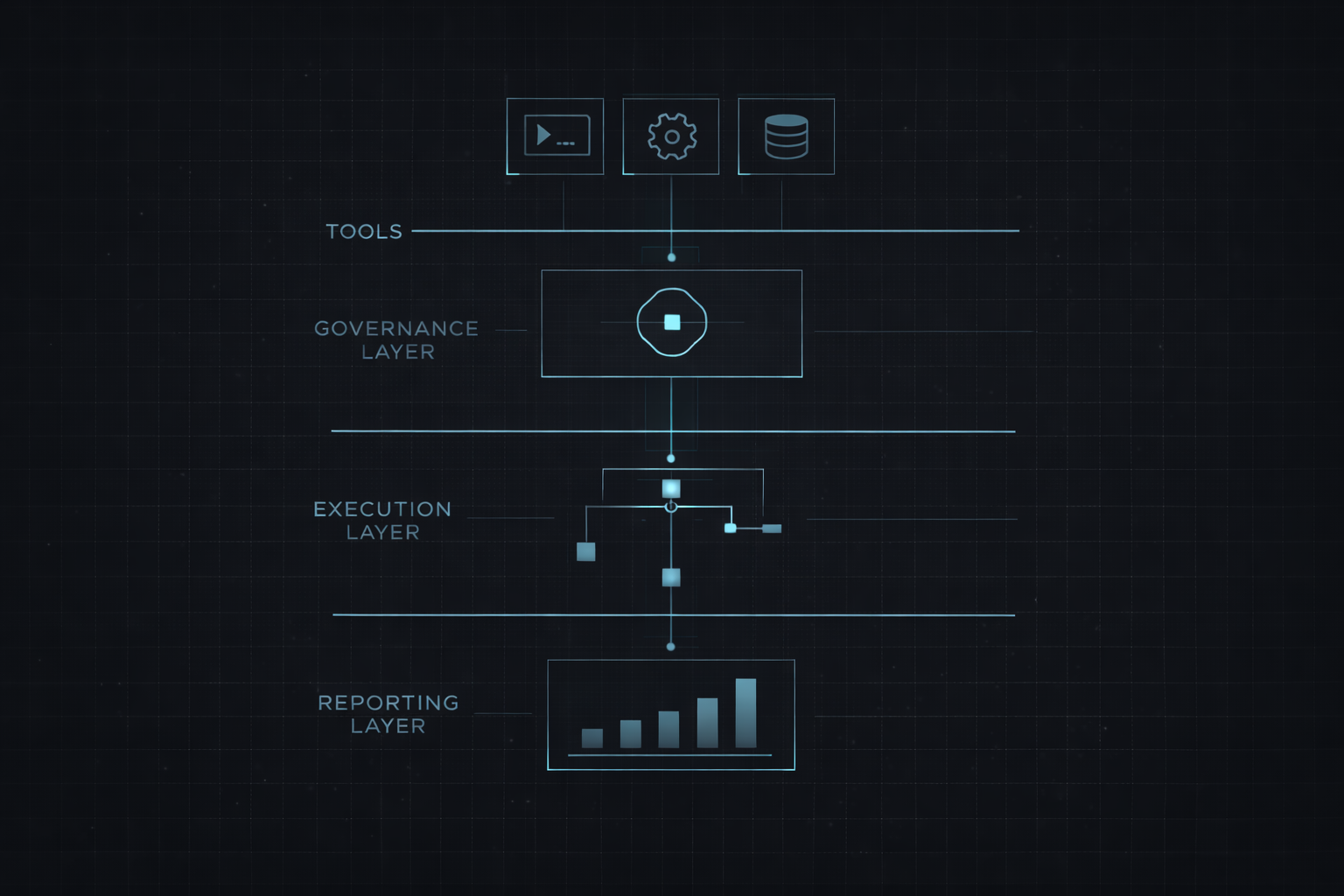
Three approaches to automation
Visual drag-and-drop workflow builder. Easy setup for non-technical users. Limited conditional logic. No governance or approval layer. Pricing scales per task — expensive at volume. Works well until your workflows outgrow the trigger-action model.
Autonomous AI agent with 310k+ GitHub stars. Extremely powerful — executes real tasks across email, files, browsers, and messaging. Open source and model-agnostic. Security risks without governance. Requires technical skill to configure and manage safely.
Custom Python workflows built around your specific constraints. Human approval at every decision point. PIN-gated execution. Measured results with full audit trail. Designed for businesses where “it ran without my knowledge” is unacceptable.
When each approach makes sense
Zapier makes sense for simple triggers between two applications, low-stakes notifications, workflows under 100 tasks per month, and non-critical operations where failure is an inconvenience rather than a liability. If your needs fit the trigger-action model and you are not hitting platform limits, Zapier works.
OpenClaw makes sense for technical users who understand security configuration and can manage the agent’s permissions responsibly. Personal automation, development workflows, research tasks, and environments where the user fully controls the machine and accepts the risk. OpenClaw is extraordinary at what it does — the question is whether your use case can tolerate autonomous execution without oversight.
Governed custom automation makes sense for business-critical workflows, client-facing operations, compliance requirements, and any context where “it ran without my knowledge” is unacceptable. When the cost of a mistake exceeds the cost of an approval step, governance is not overhead — it is infrastructure.
The governance gap between all three
Zapier executes immediately. When a trigger fires, the action runs. There is no approval layer, no review step, no moment where a human evaluates whether this specific execution should proceed. For low-stakes workflows, that is fine. For anything touching client data or financial operations, it is a structural limitation.
OpenClaw executes autonomously. It is more powerful than Zapier by orders of magnitude — but it has no built-in business governance. The agent decides what to do and does it. Security researchers have demonstrated that this autonomy can be exploited through prompt injection and skills-based data exfiltration. Power without governance is power without accountability.
NoCode Labs operates on a propose-approve-execute model. Nothing executes without explicit human authorization. Every proposed action is documented, queued for review, and logged in an immutable audit trail. The automation is just as capable — but every action has a decision trail attached to it.
For businesses, the question is not “can it automate?” All three can automate. The question is “can I trust what it does?” Trust requires governance.
Real cost comparison
Zapier Pro: $750+/month at scale. Zapier prices per task. Simple workflows cost little. But as volume increases and you add multi-step Zaps, premium integrations, and team seats, costs compound quickly. Businesses running hundreds of automations routinely hit $750–$2,000+ per month — for workflows that still have no governance layer.
OpenClaw: free software + $30–150/month in API costs + your time. The software is open source. But you pay for the LLM API calls, and more importantly, you pay with your time managing security, configuring permissions, monitoring for unexpected behavior, and debugging when things go wrong. The hidden cost is operational overhead.
NoCode Labs governed automation: $1,000–3,000/month. This includes the diagnostic audit, workflow buildout, governance layer, human approval gates, audit trails, and measured outcomes. You are not paying for a tool — you are paying for automation infrastructure that is designed around your specific constraints and accountable at every step.
Not sure which approach fits your business?
Start with a free diagnostic to identify your highest-leverage automation opportunity, or get a full audit to map every workflow and its governance requirements.
Read more: Custom automation vs Zapier · Why custom automation · How governed execution works