Why service businesses lose leads in 2026 (it's not the marketing)
Published Sep 26, 2026 · 6 min read
Most local service businesses don't have a lead problem. They have a handoff problem. The customer found you, got in touch, and then waited — and while they waited, they called someone else.
The lead isn't lost where you think
When the phone gets quiet, the first instinct is to buy more leads. More ads, a new directory, another agency. I get it. Marketing is the part of the business you can see and pay for.
But when I walk through a service business with the owner, the leak is almost never at the top. The leads are showing up. They’re getting dropped somewhere between “the customer got in touch” and “somebody got back to them.”
Those are drop-the-ball moments. Each one is small. Each one feels like a one-off. Added up over a month, they’re the difference between a full schedule and a slow week.
Five places leads get dropped
1. The call nobody answered
A homeowner with a broken AC or a leaking pipe doesn’t leave a voicemail and wait. They call the next name on the map. If your phone rings out while the crew is on a job or the office is closed, that call is gone, and you never find out it existed.
2. The form that sat in an inbox
Web forms feel less urgent than calls, so they wait. Somebody copies the details into the CRM when they get a minute. The call-back happens tomorrow. By then the customer has had two quotes from people who answered first.
3. The listing that sends people to the wrong place
An old phone number on a directory. Hours that stopped being true two years ago. A service area on Google that doesn’t include the town you actually work in. Customers trust what they see, act on it, and hit a wall. You never hear about it.
4. The estimate nobody followed up on
This one hurts because you already did the hard part. You drove out, measured, wrote the number. Then the customer went quiet, and nobody called back because the next job was waiting. A quiet customer is usually a busy one, not a lost one.
5. The review nobody answered
Reviews aren’t just reputation. They’re the last thing a new customer reads before they call. An angry review with no reply tells them nobody’s paying attention. A calm, specific reply tells them the opposite, and it costs five minutes.
Why 2026 makes it worse
A few years ago a customer called you or they didn’t. Now the same customer might find you through a Google search, a map result, an AI assistant’s answer, a directory, or a friend’s text. Then they get in touch by call, form, text, or a message on your Google profile.
Every one of those is a door. Most small teams are still watching one or two of them. The rest stay open with nobody standing there.
Customers have also gotten faster at comparing. They contact three businesses at once and go with whoever makes it easy. Being good at the work doesn’t help if you’re the third one to respond.
How to close the gaps
Find the drop before you fix anything
Don’t guess. Walk one lead from each channel through your business and time it. Call your own number after hours. Fill out your own form. Search for your trade in your town and read your own listing like a stranger would. You’ll find the worst gap in an afternoon.
Fix what you control first
Your listings, your hours, your phone number, your replies to reviews: those are yours to change today, and they don’t depend on anyone else. What the market does after that — rankings, review volume, how many people search — you measure, you don’t promise.
Automate the handoffs that repeat
Some drops need a person. Many don’t. A text back after a missed call, a follow-up two days after an estimate, a review request when the job closes: those happen every day, follow the same rules every time, and are exactly where a small team runs out of hands.
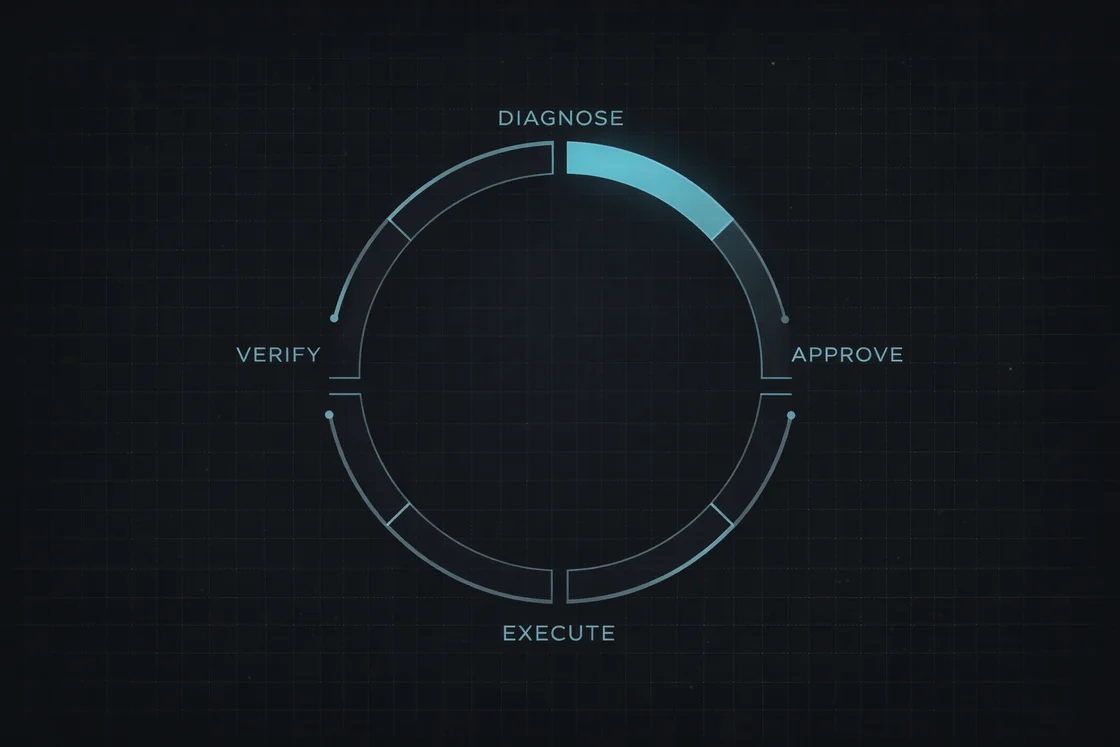
The rule I hold to: automation drafts, a person approves. Nothing goes out in your name that you haven’t signed off on, and every action leaves a record you can check. That’s how you get the speed without handing your reputation to a script.
Where NoCode Labs fits
We’re audit-first. The $500 Digital Presence Audit shows how customers find you and where your listings, reviews, and search presence are losing them. It’s a ranked fix list you keep whether you work with us or not.
If the leak is after they get in touch — the calls, forms, and follow-ups — the $750 automation audit maps how work actually moves in your business and ranks what to fix first. If we build anything, you approve every action, and the $750 is credited to the invoice.
Either way, start by finding the drop. It’s almost always cheaper to stop losing the customers you already have than to buy new ones. See the typical workflows and what they cost on the automation page.
Frequently asked questions
Keep going
Find out where your leads are dropping.
The $500 audit shows how customers find you. The $750 automation audit adds what happens after they get in touch.